
Chlorinated Polyethylene (CPE) is a modified form of polyethylene that contains approximately 34% to 44% chlorine incorporated into its polymer backbone. This unique composition provides CPE with a broad spectrum of properties, making it suitable for a wide range of industrial applications. In this article, we explore the structure, characteristics, and versatile applications of chlorinated polyethylene, emphasizing its importance in materials science and engineering.
Characteristics and Properties of Chlorinated Polyethylene
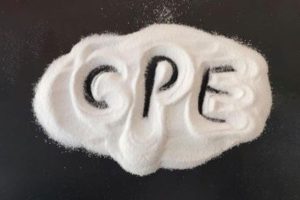
CPE is produced by chlorinating high-density polyethylene (HDPE), where hydrogen atoms are substituted with chlorine atoms. It is typically available as a white, non-toxic, tasteless powder. The density of CPE ranges from 0.93 to 0.96 g/cm³, and it has an average molecular weight of 5 to 25 million, with a melt index of 0.01–2.0 g/10 min.
The degree of chlorination significantly influences the properties of CPE:
<15% chlorine: Behaves like a plastic.
16–24% chlorine: Exhibits thermoplastic-elastomer behavior.
25–48% chlorine: Functions as a rubber-like elastomer.
Increasing chlorine content enhances oil resistance, air impermeability, and flame retardancy, whereas decreasing it improves cold resistance and flexural strength. These tunable properties make CPE a highly adaptable material for specific performance requirements.
Applications of Chlorinated Polyethylene
One of the most significant applications of CPE is as an impact modifier in polyvinyl chloride (PVC). It enhances the impact strength of PVC products, making them suitable for demanding applications. In fact, approximately 74% of global CPE consumption in 2017 was in this role.
Other key applications include:
Waterproof membranes
Wire and cable jackets
Automotive hoses and tubes
Coatings
Injection-molded parts
Extruded profiles
Beyond its use in PVC formulations, CPE also functions as a standalone high-performance elastomer or in blends with other rubbers. It is used in:
Electrical wires and cables
Hydraulic hoses
Impact-resistant plastic sheets and strips
Refrigerator sealing strips
Magnetic cards
Semi-rigid and rigid plastic profiles
ABS modification
Pipe and fitting systems
Tire compounds
Fillers such as calcium carbonate, clay, and talc are commonly used in CPE compounds to enhance specific properties and reduce cost.
Key Properties of CPE Resins and Elastomers
CPE offers excellent physical and mechanical performance, including:
Chemical, oil, and heat resistance
Excellent performance at low temperatures
High compressive and tensile strength
Flame retardancy
High filler acceptance
Abrasion resistance
Good environmental aging resistance
CPE materials range from rigid and crystalline resins to soft, flexible elastomers, enabling a wide array of formulations tailored for various industries.
Conclusion
Chlorinated Polyethylene (CPE) is a versatile polymer that has become indispensable across multiple industries. Its adaptability, excellent mechanical properties, and chemical resistance make it a key ingredient in enhancing the durability, performance, and functionality of polymer-based products.
From PVC impact modifiers to elastomeric materials for cables, hoses, and sealing systems, CPE continues to drive innovation in materials engineering. As technological advancements evolve, CPE stands as a testament to the power of polymer modification in addressing modern material challenges and creating high-performance, future-ready products.