Polymer materials are widely utilized across numerous industries due to their unique properties such as flexibility, durability, and lightweight structure. The electrical and electronics industry is no exception. Polymers have become essential components in electronic devices, used in various forms including insulators, conductors, and semiconductors. In this blog post, we will explore the diverse polymer applications in electricity and electronics and their significance in modern technology.
Polymers in Electrical Insulation
Polymers have long been used as electrical insulation materials due to their low conductivity and excellent dielectric strength. They are commonly applied in insulating wires, cables, and various electrical components.
Polyvinyl Chloride (PVC): This thermoplastic polymer is widely used for electrical cable insulation. PVC offers excellent resistance to moisture, chemicals, and UV radiation, making it ideal for both indoor and outdoor applications.
Polyethylene (PE): PE is another popular thermoplastic used in the insulation of high-voltage cables. It features excellent dielectric properties and environmental resistance, which makes it suitable for demanding outdoor environments.
Polymers as Conductive Materials
While most polymers are insulating by nature, some can be chemically modified to conduct electricity. These conductive polymers are used in specialized electronic applications:
Polyaniline (PANI): PANI is one of the most studied conductive polymers, known for its tunable conductivity and environmental stability. It is commonly used in sensors, batteries, capacitors, and anti-static coatings.
Polyacetylene (PA): PA was one of the first discovered conductive polymers. Though sensitive to air and moisture, it has high conductivity and is used in experimental applications such as transistors and organic solar cells.
Polymers as Semiconductors
Semiconducting polymers are capable of conducting electricity under specific conditions and are integral to flexible electronics and optoelectronic devices:
Polythiophene (PT): Known for its excellent electronic properties, PT is widely used in the fabrication of organic solar cells, OLEDs, and thin-film transistors.
Polyfluorene (PF): PF is valued for its high electron mobility and light-emitting properties, making it ideal for applications in OLED displays and photovoltaic cells.
Applications of Polymers in Electrical and Electronics Engineering
Polymers have a wide range of applications in electrical and electronics systems. Key uses include:
1. Electrical Insulation
Polymers such as PVC and PE are extensively used to insulate wires, cables, transformers, and capacitors, ensuring safety and preventing short circuits.
2. Conductive Components
Conductive polymers like PANI and PA are employed in sensors, energy storage devices, electromagnetic shielding, and printed circuit boards (PCBs).
3. Semiconductor Devices
Semiconducting polymers such as PT and PF are used in the development of flexible displays, organic light-emitting diodes (OLEDs), organic solar cells, and thin-film transistors.
Conclusion
The key requirement for electrical insulation materials is low electrical conductivity—an inherent characteristic of most polymers. This makes polymers ideal for insulating wires, cables, and housings. Depending on the application, rigid polymers (for enclosures and protective casings) and flexible polymers (for wire and cable insulation) are selectively used to meet both mechanical and electrical needs.
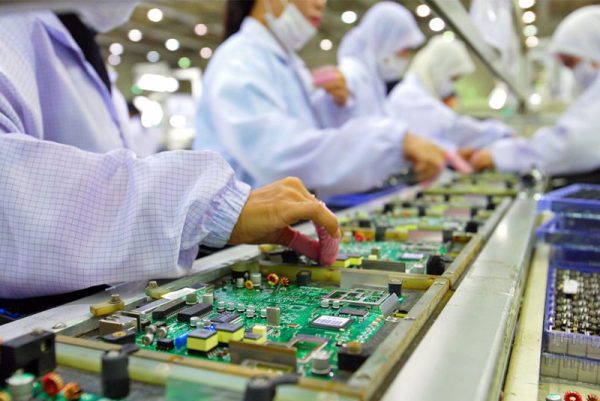
In today’s world, electrical and electronic devices are omnipresent—from mobile phones to deep-sea and space applications. These devices must perform under various environmental conditions, including extreme temperatures, high humidity, UV exposure, thermal shock, and chemical pollutants. Therefore, when selecting polymers for electricity and electronics applications, it’s crucial to evaluate factors such as weathering resistance, thermal stability, and long-term durability to ensure reliable performance across diverse use environments.