
About Us
Atman products
Engineering solutions
The experience of production activities in the polymer field and the technical knowledge and practical laboratory and workshop equipment of Atman Polymer are with you to have an optimal production.

Related Industries
News and Articles
- 2024/06/19
- Articles
Polycarbonate-ABS (PC-ABS) is an engineered thermoplastic alloy combining the strength and heat resistance of polycarbonate with the flexibility and processability of ABS (Acrylonitrile Butadiene Styrene). The balance of properties in PC-ABS alloys depends on the PC-to-ABS ratio, the molecular weight of the polycarbonate, and the use of specific additives. This alloy exhibits excellent flowability, processability, plating performance, and surface appearance. Compared to ABS, PC-ABS shows significantly improved heat resistance, impact strength, and performance in thin-walled applications.
The PC-to-ABS ratio is the key factor influencing the final product’s heat resistance. Due to its synergistic behavior, the PC-ABS alloy delivers superior impact resistance at low temperatures — outperforming both PC and ABS individually.
Main Features of PC-ABS
General Characteristics:
PC-ABS is a slightly amorphous, odorless, and non-toxic engineering thermoplastic. It typically has a density ranging between 1.1 and 1.2 g/cm³.Mechanical Properties:
Offers excellent mechanical performance with outstanding impact resistance.Thermal Performance:
Service temperature ranges from 60°C to 120°C, with a Heat Deflection Temperature (HDT) between 120°C and 140°C.Electrical Properties:
Exhibits semi-insulating behavior.Flame Resistance:
Possesses high flame-retardant capabilities.Environmental Stability:
Demonstrates good stability under UV exposure and sunlight.Chemical Resistance:
Resistant to acids and oils, but not resistant to alkalis, oxidizing acids, amines, or ketones. Soluble in aromatic chlorinated and hydrocarbon solvents.Hydrolysis Sensitivity:
Highly sensitive to hydrolysis. Exposure to water at temperatures above 60°C can lead to hydrolytic degradation and cracking.
PC-ABS Alloy Overview
The Polycarbonate-ABS alloy blends two major engineering plastics—polycarbonate for its high heat and impact resistance, and ABS for its toughness at low temperatures and excellent processability. The result is a material suitable for demanding applications across various industries, such as automotive, electronics, home appliances, medical equipment, and information technology.
PC-ABS resins are available in different grades, including general-purpose, flame-retardant, and high-impact resistant types. Their ability to maintain high impact strength even at sub-zero temperatures, along with their superior heat resistance, makes them highly desirable in performance-critical applications.
Applications of PC-ABS Alloy
Automotive Industry:
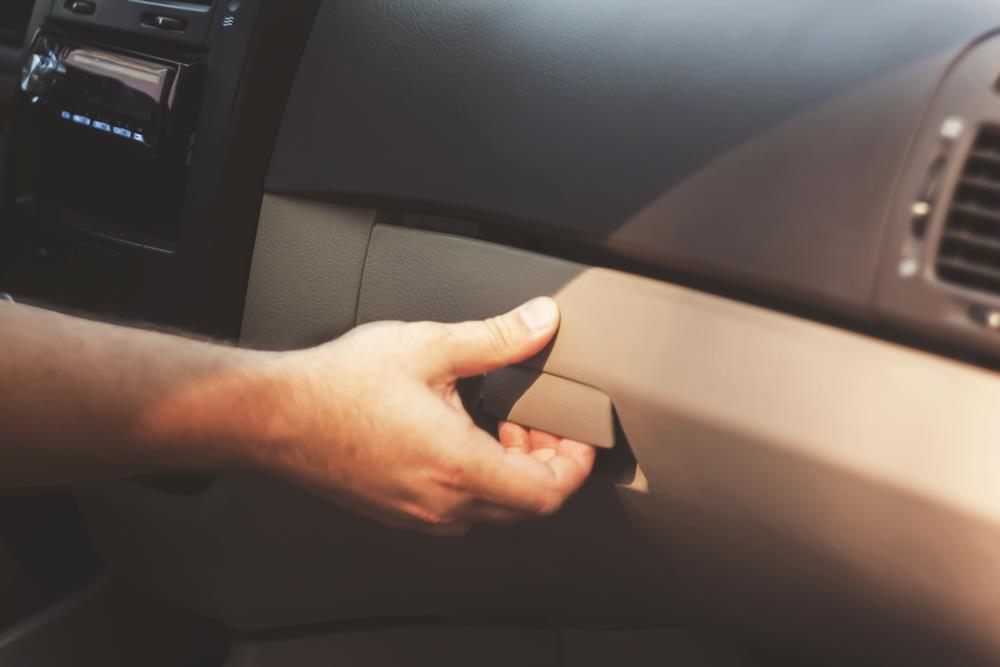
Center consoles, instrument panels, interior/exterior trim parts, trunk components.Electronic Components:
Switch housings, hair dryers, and other devices requiring impact resistance.Home Appliances & Consumer Electronics:
TV housings, laptop monitor frames, handheld devices, LCD bezels, keyboard keys, adapters, chargers, and mobile phone bodies.
PC-ABS Processing Guidelines
Pre-Drying:
Pre-dry at 80–110°C for 3–4 hours to eliminate moisture.Thermal Stability:
Begins degrading at around 300°C, releasing CO₂. Mechanical properties drop significantly beyond this temperature. Processing temperatures should be managed carefully.Injection Shot Size:
Optimal shot weight is 35–65% of the injection cylinder capacity.Barrel Temperature:
220–280°C depending on grade and part geometry.Mold Temperature:
Recommended range is 70–100°C.Injection Speed:
Slow to medium speeds are preferred for optimal surface quality.Mold Shrinkage:
Typical shrinkage is 0.5–0.7%; for reinforced PC-ABS grades, shrinkage ranges from 0.2–0.4%.Post-Processing Capabilities:
Suitable for printing, plating, bonding, coating, and machining. To relieve internal stresses, heat treatment at 80°C for 4 hours is recommended.

- 2024/06/19
- Articles
ABS stands for Acrylonitrile Butadiene Styrene, an engineered, amorphous thermoplastic known for its excellent impact resistance. ABS is composed of three monomers—acrylonitrile, butadiene, and styrene—each contributing specific properties to this terpolymer.
Acrylonitrile: A synthetic monomer derived from propylene and ammonia. It enhances the chemical resistance and thermal stability of ABS.
Butadiene: A monomer with rubber-like properties. It provides impact strength and toughness to the polymer.
Styrene: Produced from ethylbenzene via dehydrogenation, it imparts rigidity and improves processability, as well as giving ABS its glossy surface.
The monomer ratios in ABS typically range from 15–35% acrylonitrile, 5–30% butadiene, and 40–60% styrene. The resulting polymer is a crosslinked network of polybutadiene and polystyrene, with dispersed poly(styrene-acrylonitrile) chains. The polar nitrile groups from neighboring chains attract one another, enhancing strength compared to pure polystyrene.
Styrene contributes a glossy and impermeable finish to the plastic. Polybutadiene provides toughness, especially at low temperatures. ABS generally performs well within the temperature range of 20–80°C (68–176°F), though its mechanical properties vary with temperature. This is due to the rubber phase, where fine elastomer particles are dispersed throughout a rigid thermoplastic matrix.
Key Features of ABS
The most important mechanical properties of Acrylonitrile Butadiene Styrene (ABS) are impact resistance and toughness. ABS sits between commodity plastics and engineering plastics in terms of performance. Its main properties include:
High mechanical strength
Excellent impact resistance, even at low temperatures
Good electrical insulation
Weldability and strong bonding capability
Good abrasion and strain resistance
High dimensional stability (maintains mechanical strength over time)
Glossy appearance and excellent surface finish
Very good resistance to dilute acids and alkalis
Moderate resistance to aliphatic hydrocarbons
Poor resistance to aromatic hydrocarbons, halogenated hydrocarbons, and alcohols
Impact resistance can be further improved by increasing the proportion of butadiene relative to styrene and acrylonitrile. However, altering the composition may negatively impact other characteristics. Therefore, ABS can be tailored into different grades based on application needs.
ABS Applications
Thanks to its lightweight and excellent processability, ABS is widely used across industries. It performs well in the 20–80°C temperature range. Its injection molding capabilities make it suitable for a variety of applications, such as:
Drainage piping systems
Musical instruments
Automotive parts (e.g., bumper bars, dashboards, interior trim, door handles, seat belt components)
Medical and drug delivery systems
Electrical and electronic enclosures
Consumer goods (e.g., suitcases, pens, toys like LEGO bricks)
Home appliances (e.g., vacuum cleaner housings, food processor parts, refrigerator interiors)
Computer hardware (e.g., keyboards, adapters)
Fittings and pipes: ABS pipes are widely used due to their resistance to corrosion, rust, and decay, and because they are easy to install.
ABS Processing Guidelines
Injection Molding
Pre-Drying: If moisture content is high, dry the material at 80°C for 4 hours. Signs of residual moisture include streaks, bubbles, or surface defects on molded parts.
Melt Temperature: 210–270°C
Mold Temperature: 40–70°C
Injection Pressure: 50–100 MPa
Injection Speed: Medium to high
Extrusion
Pre-Drying: Dry the material at 70–80°C for 3 hours
Extrusion Temperature: 210–240°C
Screw Design: Recommended L/D ratio of 25–30

- 2024/06/18
- Articles
Chlorinated Polyethylene (CPE) is a modified form of polyethylene that contains approximately 34% to 44% chlorine incorporated into its polymer backbone. This unique composition provides CPE with a broad spectrum of properties, making it suitable for a wide range of industrial applications. In this article, we explore the structure, characteristics, and versatile applications of chlorinated polyethylene, emphasizing its importance in materials science and engineering.
Characteristics and Properties of Chlorinated Polyethylene
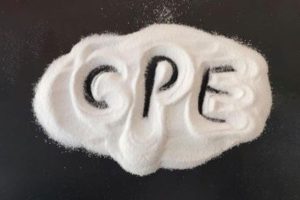
CPE is produced by chlorinating high-density polyethylene (HDPE), where hydrogen atoms are substituted with chlorine atoms. It is typically available as a white, non-toxic, tasteless powder. The density of CPE ranges from 0.93 to 0.96 g/cm³, and it has an average molecular weight of 5 to 25 million, with a melt index of 0.01–2.0 g/10 min.
The degree of chlorination significantly influences the properties of CPE:
<15% chlorine: Behaves like a plastic.
16–24% chlorine: Exhibits thermoplastic-elastomer behavior.
25–48% chlorine: Functions as a rubber-like elastomer.
Increasing chlorine content enhances oil resistance, air impermeability, and flame retardancy, whereas decreasing it improves cold resistance and flexural strength. These tunable properties make CPE a highly adaptable material for specific performance requirements.
Applications of Chlorinated Polyethylene
One of the most significant applications of CPE is as an impact modifier in polyvinyl chloride (PVC). It enhances the impact strength of PVC products, making them suitable for demanding applications. In fact, approximately 74% of global CPE consumption in 2017 was in this role.
Other key applications include:
Waterproof membranes
Wire and cable jackets
Automotive hoses and tubes
Coatings
Injection-molded parts
Extruded profiles
Beyond its use in PVC formulations, CPE also functions as a standalone high-performance elastomer or in blends with other rubbers. It is used in:
Electrical wires and cables
Hydraulic hoses
Impact-resistant plastic sheets and strips
Refrigerator sealing strips
Magnetic cards
Semi-rigid and rigid plastic profiles
ABS modification
Pipe and fitting systems
Tire compounds
Fillers such as calcium carbonate, clay, and talc are commonly used in CPE compounds to enhance specific properties and reduce cost.
Key Properties of CPE Resins and Elastomers
CPE offers excellent physical and mechanical performance, including:
Chemical, oil, and heat resistance
Excellent performance at low temperatures
High compressive and tensile strength
Flame retardancy
High filler acceptance
Abrasion resistance
Good environmental aging resistance
CPE materials range from rigid and crystalline resins to soft, flexible elastomers, enabling a wide array of formulations tailored for various industries.
Conclusion
Chlorinated Polyethylene (CPE) is a versatile polymer that has become indispensable across multiple industries. Its adaptability, excellent mechanical properties, and chemical resistance make it a key ingredient in enhancing the durability, performance, and functionality of polymer-based products.
From PVC impact modifiers to elastomeric materials for cables, hoses, and sealing systems, CPE continues to drive innovation in materials engineering. As technological advancements evolve, CPE stands as a testament to the power of polymer modification in addressing modern material challenges and creating high-performance, future-ready products.
- 2024/06/18
- Articles
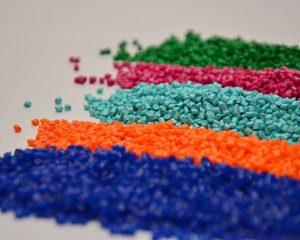
Polypropylene compounds are thermoplastic resins produced by blending one or more base polyolefins with various functional components such as impact modifiers, fillers and reinforcements, pigments, and additives. These PP compounds offer a broad spectrum of properties and are widely used in automotive, electrical appliances, building and construction, and furniture components.
Structure and Behavior of Polypropylene Compounds
Polypropylene compound shares similarities with polyethylene, particularly in solution behavior and electrical characteristics. However, the presence of methyl groups in polypropylene enhances its mechanical strength and thermal resistance, albeit at the expense of reduced chemical resistance. In isotactic polypropylene, the methyl groups are aligned on one side of the carbon backbone, resulting in higher crystallinity. This configuration makes it firmer and more resistant to creep compared to atactic polypropylene and polyethylene.
Introduction to Polypropylene (PP)
Polypropylene (PP) belongs to the polyolefin family and is among the three most widely used thermoplastics globally. PP compounds are utilized across many applications, such as:
Automotive industry
Industrial applications
Consumer goods
Furniture and household products
One notable advantage of PP is its low density, the lowest among commodity plastics.
Polypropylene Polymer Structures
Based on the spatial arrangement of methyl groups (CH₃) on the polymer chain, polypropylene is classified into:
Atactic PP: Irregular methyl group arrangement
Isotactic PP: Methyl groups aligned on one side of the chain
Syndiotactic PP: Alternating methyl group arrangement
Types of Polypropylene Compounds
1. Homopolymer Polypropylene
This is the most commonly used grade and consists of only propylene monomers. It has a semi-crystalline structure and is widely used in:
Packaging
Textiles
Healthcare products
Piping systems
Automotive parts
Electrical insulation
2. Copolymer Polypropylene
There are two main subtypes of copolymers:
Random Copolymer PP: Produced by copolymerizing ethylene and propylene, with ethylene units randomly distributed (up to 6%). These PP compounds are flexible and optically transparent, ideal for transparent applications or products requiring aesthetic appeal.
Block Copolymer PP: Contains a higher ethylene content (5–15%) arranged in regular blocks. These compounds offer higher strength but are less flexible, making them suitable for structural and industrial uses.
PP copolymers are commonly used in:
Packaging
Home appliances
Pipes and films
Electrical components
Automotive applications requiring impact resistance
3. Terpolymer Polypropylene
Terpolymers consist of propylene, ethylene, and butene units randomly distributed along the chain. These poly propylene compounds exhibit enhanced clarity and reduced crystallinity, making them ideal for sealing films and transparent packaging.
4. High Melt Strength Polypropylene (HMS PP)
HMS PP is modified to include long-chain branching, offering high melt strength and melt phase elasticity. These PP compounds feature:
Excellent foamability
Good chemical resistance
High thermal stability
They are widely used in:
Food packaging foams
Automotive components
Construction materials
Disadvantages of Polypropylene Compounds
Despite its versatility, polypropylene compound has several limitations:
Poor resistance to UV radiation, impact, and scratches
Limited service temperature range (90–120°C)
Tendency to swell in chlorinated and oxidizing environments
Poor paint and coating adhesion
Applications of Polypropylene Compounds
1. Packaging
Polypropylene is widely used in packaging due to its high strength, low cost, and moisture barrier properties. It is ideal for:
Food packaging (films, containers, shrink wraps)
Electronic and graphic films
Disposable closures (e.g., diaper tabs)
Cast and BOPP (biaxially oriented polypropylene) films
2. Consumer Goods
PP compounds are used in:
Transparent containers
Appliances and household items
Toys and suitcases
Furniture components
3. Automotive Industry
Thanks to its cost-effectiveness, moldability, and mechanical performance, PP is essential for:
Bumpers
Fender liners
Battery casings
Door trims
Interior panels
Key properties include:
Low thermal expansion
Lightweight
Chemical and weather resistance
Excellent impact-to-stiffness balance
4. Fibers and Fabrics
PP is a dominant material in nonwoven and woven fabrics:
Ropes and tapes
Spunbond and meltblown fabrics
Textile fibers for industrial and marine uses
5. Medical Applications
Thanks to its biocompatibility and chemical resistance, medical-grade PP is used for:
Disposable syringes
Petri dishes and lab containers
IV bottles and medical vials
Food-grade trays and containers
6. Industrial Uses
PP sheets and components are used for:
Chemical tanks
Industrial pipes
RTP (Returnable Transport Packaging)
Corrosive-resistant liners
7. Biaxially Oriented Polypropylene (BOPP) Film
BOPP is stretched in both directions for better:
Strength and clarity
Tear resistance
Gloss and moisture barrier
Dimensional stability
Processing Guidelines for PP Compounds
PP can be processed using most standard thermoplastic methods:
Injection Molding
Melt temperature: 200–300°C
Mold temperature: 10–80°C
Drying: Not required under normal storage
High mold temperature enhances surface finish
Shrinkage rate: 1.5–3% (depending on thickness and conditions)
Extrusion
Used for pipes, films, cables, etc.
Melt temperature: 200–300°C
Compression ratio: 3:1
Barrel temperature: 180–205°C
Other Processing Methods
Compression molding
Rotational molding
Blow molding
Extrusion blow molding
Injection stretch blow molding
- 2023/06/06
- Articles
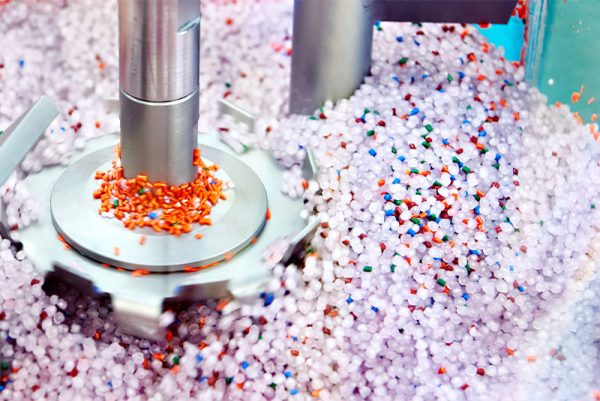
Polymer compounding is the process of mixing and blending different polymers, additives, and fillers to produce materials with targeted properties and performance characteristics. This process involves combining specific ingredients in a mixer and subsequently processing the resulting blend to create a final product that meets desired functional requirements. In this article, we explore the fundamentals of polymer compounding, along with its key applications, advantages, and challenges.
Applications of Polymer Compounding
Polymer compounding is used across a wide range of industries due to its versatility and ability to tailor material properties. Common applications include:
Automotive: Compounded polymers are used in dashboards, bumpers, interior trims, and tires. These materials are selected for their strength, thermal stability, and resistance to impact and chemicals.
Construction: Polymer compounds are used in pipes, insulation, roofing sheets, and profiles, offering excellent weatherability, flexibility, and chemical resistance.
Medical: Biocompatible polymer compounds are used in syringes, catheters, implants, and diagnostic equipment. Their resistance to sterilization methods and pathogens makes them ideal for medical use.
Packaging: From plastic wraps and bags to containers and trays, compounded polymers are widely used in packaging applications due to their barrier properties, flexibility, and cost-effectiveness.
Benefits of Polymer Compounding
Polymer compounding offers multiple benefits that make it indispensable in materials engineering:
Customization: Manufacturers can tailor mechanical, thermal, optical, and electrical properties by adjusting the formulation, allowing for application-specific materials.
Cost Efficiency: By blending base polymers with functional additives and inexpensive fillers, manufacturers can reduce material costs without sacrificing performance.
Enhanced Performance: Properties such as tensile strength, impact resistance, flame retardancy, UV stability, and thermal resistance can be significantly improved through compounding.
Challenges in Polymer Compounding
Despite its advantages, polymer compounding also poses certain technical and operational challenges:
Material Compatibility: Some polymers and additives may be chemically incompatible, leading to poor dispersion, phase separation, or degradation, which negatively impacts final material performance.
Processing Complexity: The compounding process often requires advanced mixing techniques, temperature control, and machinery expertise. Improper processing can result in defects or inconsistent material properties.
Environmental Concerns: Compounding processes may generate production waste or result in non-recyclable composite materials. Disposal and environmental compliance remain critical considerations.
Conclusion
Polymer compounding is a highly adaptable and valuable process for creating customized polymer materials with enhanced properties suited to specific applications. While it offers notable advantages in terms of performance, cost, and design flexibility, manufacturers must also address challenges such as material compatibility, processing complexity, and environmental sustainability. With proper formulation and processing control, polymer compounding continues to be a cornerstone in advanced material development across industries.
- 2023/06/06
- Articles
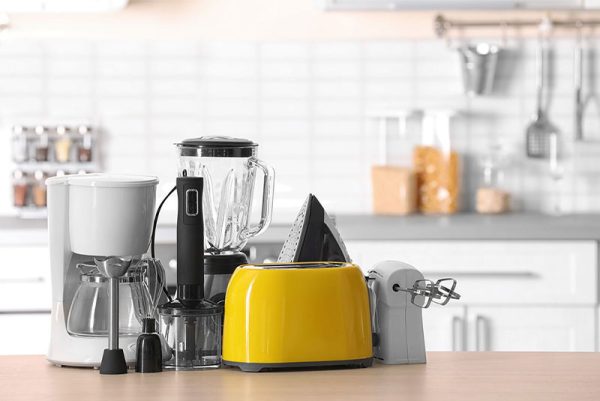
The home appliance industry has been significantly transformed by the integration of polymer materials. Known for their flexibility, durability, lightweight nature, and cost-effectiveness, polymer materials in the home appliance sector are indispensable in designing products that are both functional and efficient. In this blog post, we delve into the key applications of polymer materials in the manufacturing of home appliances and how they enhance product performance.
Polymer Materials in Home Appliances
Polymer materials have been utilized in home appliances for decades in the form of composites, coatings, and fibers. They serve as essential components in the design and production of modern household devices. Among the most widely used polymers are:
Polypropylene (PP): A thermoplastic polymer commonly used in washing machines, refrigerators, and dishwashers due to its excellent chemical resistance, impact resistance, and low cost.
Acrylonitrile Butadiene Styrene (ABS): Frequently used in vacuum cleaners, blenders, and food processors, ABS is valued for its outstanding impact resistance, heat tolerance, and dimensional stability.
Polycarbonate (PC): Often found in coffee makers, kettles, and toasters, PC offers superior heat resistance, optical clarity, and structural integrity.
Polymer Materials in Refrigerators
In refrigerators, polymer materials contribute to:
Improved insulation: Composite materials made of polymers reinforced with glass fibers or metals enhance thermal insulation and reduce energy consumption.
Surface protection: Durable polymer coatings are applied to internal and external surfaces to guard against scratches, dents, and corrosion.
Structural reinforcement: Polymer fibers strengthen interior components, boosting mechanical performance and product longevity.
Polymer Materials in Washing Machines
For washing machines, polymer materials offer:
Energy efficiency and lightweight design: Polymer composites reduce weight while maintaining rigidity, resulting in lower energy usage during operation.
Durable coatings: Protective coatings prevent wear and damage from repeated exposure to water, detergents, and vibrations.
Reinforced interiors: Polymer fibers are added to internal parts for increased durability and strength under mechanical stress.
Polymer Materials in Dishwashers
In dishwashers, the use of polymer materials ensures:
Thermal and acoustic insulation: Composite materials help reduce noise and improve energy efficiency by retaining heat during wash cycles.
Protective finishes: Specialized coatings resist abrasion, water damage, and chemical exposure from detergents.
Enhanced structural integrity: Fiber-reinforced polymers are used in racks and internal panels to withstand prolonged use and high temperatures.
Polymer Materials in Ovens
Ovens benefit from polymer materials in several ways:
High-temperature insulation: Polymer composites improve thermal insulation, minimizing energy loss and enhancing performance.
Scratch-resistant coatings: These protect both the interior and exterior surfaces from frequent cleaning and mechanical damage.
Heat-stable reinforcement: Polymer fibers are engineered to maintain structural stability at elevated temperatures, supporting safe and long-term operation.
Conclusion
The use of polymer materials in the home appliance industry has introduced a new era of innovation, efficiency, and sustainability. Their adaptability into composites, coatings, and fibers allows manufacturers to optimize product performance while reducing weight, cost, and energy consumption. As technology continues to evolve, polymer materials are expected to play an even more critical role in the development of next-generation home appliances.